
Not long ago I got into one of those discussions that can happen when bookish friends are at the bar and have been waiting too long for a table. “What was the first book you can remember reading where you immediately wanted more?”
Like any question that leads to a great debate, one that is chock-full of ambiguity. Does it mean what book made me want more of the author’s work?…More of that series?…Or does it really try to find out what book started to turn me into a reader?
So I thought back to the books I read as a kid. I discounted the books that we usually think of as children’s books, simply because they are a different reading experience than novels or short stories. And while I know it wasn’t the first book I read, I kept coming back to one title. I remember when I finished it, I just had to tell someone how great it was. My Papa was the other sci-fi lover in the family so that’s whose ear I bent (in my mind it was five minutes, but now that I have kids I know it was probably more like a day). And I remember being beside myself when I found out there were more books in the series.
The book was The Hitchhiker’s Guide to the Galaxy. 30 years (or so) later, the book still holds up to repeat reading, and stands as one of my favorites. And as I look back over a reading life that has spanned about 35 years, that book seems to be a remarkable standard-bearer for the type of books I love the most.
If I stand at my bookshelf, it’s easy to see the books I read the most. To Say Nothing of the Dog, by Connie Willis, is heavily-creased, dog-eared, faded and generally looks like it’s gone a few rounds with a hyper puppy (a fitting analogy if you’ve read the book). Red Thunder, by John Varley, though not much more than a pulp sci-fi novel, is probably the most heavily highlighted and annotated book I own. Jasper Fforde’s The Eyre Affair, has been forced on so many of my friends that I’m on my fourth copy. Lamb, by Christopher Moore… I could go on and on…
But it’s been only recently, that I realized not only how much these books are emblematic of the books I love to read the most, but they are also harbingers of the kind of writing I aspire to, even if I don’t always realize it.
What ties these books together is not just a genre–sure I love sci-fi, but there are hundreds of great sci-fi books that I’ve devoured and never picked up again. It’s also true that all of these are wildly funny (although with Red Thunder I would say that while the story is humorless, the characters bring a great wit to the events), and that’s a sure way to my heart. But if I had to pick a single thing that brings them all together it’s dialogue–I could pull back a bit and call it “Voice” just as easily, since several of these have a delightful first person narration that speaks directly to the reader.
Why? Every book I’ve ever read has dialogue. So what is it about the dialogue in these books that makes them so gripping to me?
It took me a long time to be able to answer that question. In most of these books the dialogue isn’t particularly poetic, or lovely. Nor are the characters’ words particularly insightful.
No, what makes these books such fine examples of gripping dialogue is that the author uses the dialogue not only as a means to tell the story, but also as a tool for character building. But perhaps most important of all, the characters nearly never say what you think they will.
Reading good dialogue is like watching an intricate fencing match. Each participant has their own agenda–maybe one is trying to get a straight answer, while the other is teasing with tiny revelations like a prose dance-of-the-seven-veils. In great dialogue, there is offense and defense, lunges and ripostes, jabs and parries. When dialogue is good, a section of dialogue will never wind up where you thought it would.
To me this is not only the hallmark of great writing, but also of a great storyteller. And will always get me coming back for more.


 Written based on the
 It’s time get the new year off to a creative start—and make some resolutions you’ll actually keep in the process.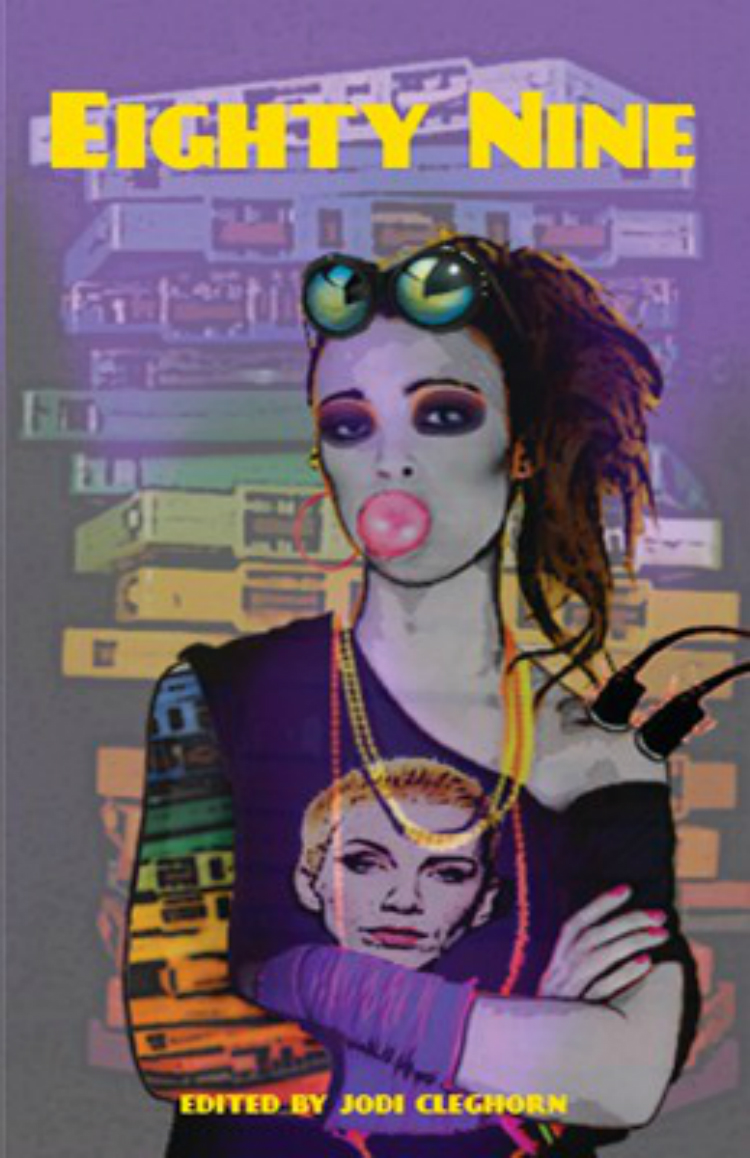
 “Eighty-Nine” is the third offering from Literary Mix Tapes (a quarterly crowd-sourced short fiction anthology inspired by music), and the second one I’m a part of.

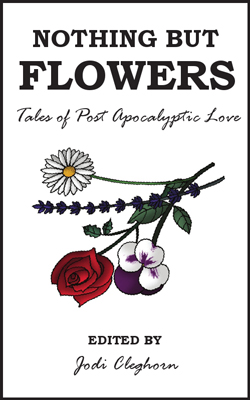 “Nothing But Flowers: tales of post apocalyptic love” is the second offering from Literary Mix Tapes (a quarterly crowd-sourced short fiction anthology inspired by music)…. and I am fortunate enough to have a story included.
 In the international terminal of a large European airport, Monday morning is about to get a whole lot worse. At 7.35am Pangaean Airlines, one of Europe’s major carriers, is put into receivership grounding all flights, stranding thousands of passengers and impounding tonnes of luggage. But all is not as appears on the surface and the sliding-doors moment of one woman deciding to retrieve her suitcase will ricochet through the lives around her.
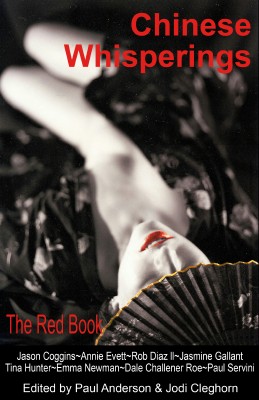 In a small North American university town ten lives are intersecting…
 Where Is My Spot?